SpaCE Lab
Led by Dr. Phoebe Zarnetske
MSU Spatial and Community Ecology Lab (SpaCE Lab)
The Spatial and Community Ecology Lab (SpaCE Lab) is a VIP team focused on understanding and predicting changes in biodiversity across space and time. We build metanetworks — networks of potential ecological interactions among species created from comprehensive knowledge bases. With network modeling, spatial and temporal biodiversity observations, climate, and human modifications, we analyze metanetworks to understand how the structure and function of biodiversity changes over time and space. Our research helps provide open and comprehensive metanetwork databases and reproducible workflows for biodiversity research and conservation applications. As a complement to our big data research, our lab also performs field and lab experiments at the Kellogg Biological Station and KBS-LTER to quantify climate change impacts on ecological communities in grasslands and freshwater systems. The SpaCE Lab is within the MSU Department of Integrative Biology and is also affiliated with the Institute for Biodiversity, Ecology, Evolution, and Macrosystems (IBEEM).
Research Projects
The Spatial & Community Ecology Lab at MSU (MSU SpaCE Lab www.communityecologylab.com) has several ongoing computational projects focused on understanding and predicting how biodiversity is affected by climate change and land use change with continental to global scale spatial and natural history datasets. The main projects are on “MetaNetworks”; networks of potential interactions among species:
- the Avian MetaNetwork (interactions among birds around the world)
- the Costa Rica La Selva-Volcan Barva MetaNetwork (tropical species interactions along a steep elevation gradient in Costa Rica)
- the North American aquatic-terrestrial MetaNetwork (a network connecting organisms in freshwater and terrestrial sites within the National Ecological Observatory (NEON).
These projects focus on quantifying how species interact with each other through space and time, and how climate change and land use change affect biodiversity. Students will work in a team (with other undergraduate students, graduate students, postdocs, PI), to compile data on interspecific behavior of birds, mammals, fish, insects, and plants, using community ecology concepts and natural history and species accounts (e.g., from Birds of the World Online, and systematic literature review), enhance the data science workflow, and contribute to preliminary tests of an AI-assisted data synthesis workflow. The research will contribute new open species interaction databases and workflows for research and conservation applications. Subsequent analysis will connect interaction networks with field observations of species in space and time (e.g., with eBird, iNaturalist, GBIF, NEON, and the North American Breeding Bird Survey). Ultimately, the interaction data will become a publicly available digital natural history and conservation databases, especially useful for researchers and managers.
Methods and Technologies
Our research uses:
- High Performance Computing
- Applications of Machine Learning and Artificial Intelligence to data extraction and synthesis
- R, Python, and related programs
- Markdown and Quarto for notebook documentation
- Git for code development
- Systematic literature review
- Google workspace applications
Areas of Interest
- Computer Science
- Data Science
- Computational Mathematics
- Statistics
- Ecology
- Conservation
- Environmental Science
- Global Change
- Artificial Intelligence
Preferred Interests and Preparation
The SpaCE Lab team welcome students from all academic backgrounds and levels of experience. We promote a collaborative, supportive, and exploratory environment where curiosity, creativity, teamwork, and a willingness to learn are the valuable assets.
Students will gain experience in community ecology, behavioral ecology, biodiversity, digital natural history, open science, data science, responsible AI applications in research, reproducible research, collaborative research, and R and GitHub, among other aspects.
During the first semester (Fall 2026), our focus will be on establishing a strong foundation for a long-term VIP team with current lab members. We seek students who are excellent communicators, are self-motivated, and work well within a collaborative team.
Useful preparation includes:
- Interest in scientific exploration and problem-solving
- Openness to working with computational tools, learning new applications, and developing reproducible computational workflows
- Experience or coursework in areas like programming or data science (helpful but not required)
- Experience or coursework in areas like biology, ecology, environmental science, conservation (helpful but not required)
- Enthusiasm for contributing to a diverse and interdisciplinary team
Meeting Schedule & Location
- Meeting Time: TBD; a weekly meeting will be set based on student and lab member schedules.
- Location: Natural Science Room 404
Team Advisor
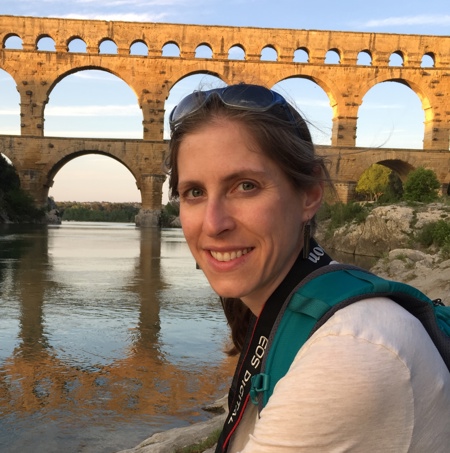
Department of Integrative Biology, Michigan State University
plz@msu.edu
The Zarnetske Spatial and Community Ecology Lab (SpaCE Lab) uses a combination of observational data, experiments, and statistical and theoretical modeling to connect observed patterns of biodiversity and community composition with underlying mechanisms across local to global scales. We aim to understand and predict how the composition and geographic distributions of species and ecological communities are affected by biotic interactions, species invasions, biophysical feedbacks, geodiversity, climate change, and land-use change. A central goal is to understand which species and ecological communities are most sensitive and/or resilient to climate change, and in turn act as 'biotic multipliers' of climate change through their outsized impacts on ecological communities.